Shawarma vs. gyro – Are you a fan of Mediterranean cuisine? Do you find yourself torn between two delicious options: shawarma and gyro? Well, you’re not alone. These two mouthwatering dishes have captured the hearts and stomachs of food enthusiasts worldwide, sparking a debate that remains unresolved.
In this article, we will delve into the origins, ingredients, and distinctive flavors of shawarma and gyro. Whether you’re a meat lover or a vegetarian, there’s much to consider when choosing between these delectable treats.
So, prepare to embark on a culinary journey as we compare and contrast shawarma and gyro in the ultimate battle for your heart and stomach.
Let’s explore the distinct qualities and flavors that make these dishes so beloved worldwide.
While all three dishes share similarities, they each have unique characteristics and origins. It’s time to delve into Mediterranean street food and explore the nuances that distinguish these dishes.
So, whether you’re a food enthusiast looking to expand your culinary knowledge or want to order a suitable dish at your favorite Mediterranean restaurant, this article is for you. Prepare to tantalize your taste buds and discover the differences between shawarma, gyro, and kebab.
By the end of this article, you’ll be able to distinguish between shawarma, gyro, and kebab and gain a deeper appreciation for the cultural significance and flavors that make each dish so unique. So, let’s embark on this delicious journey and unravel the mysteries of shawarma, gyro, and kebab.
Whether you’re a fan of one or all three, get ready to satisfy your cravings and become an expert in Mediterranean street food.
Shawarma, gyro (or giro), and kebab are popular dishes that originated in different parts of the world. While they share some similarities, they differ in their preparation, ingredients, and cultural influences.
Shawarma vs. Gyro vs. Kebab – What’s the Difference?
Origin: Shawarma is a Middle Eastern dish believed to have originated in the Levant region.
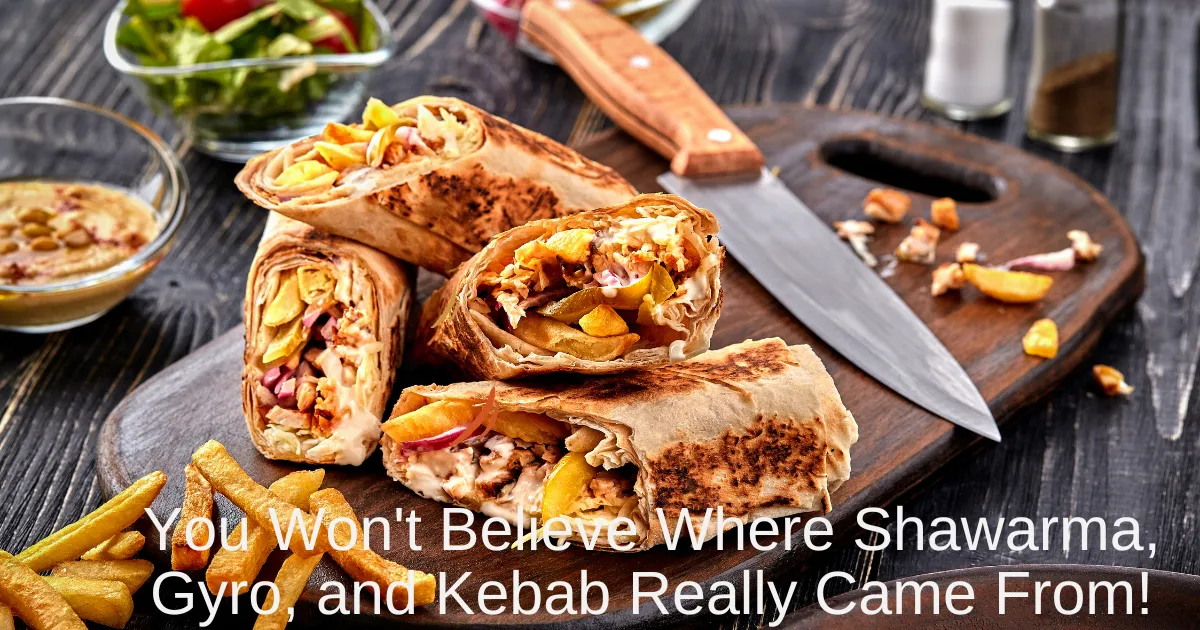
Preparation: Shawarma typically consists of marinated meat (such as chicken, beef, or lamb) slowly roasted on a vertical spit or rotisserie. The meat is thinly sliced and served in pita bread or flatbread, often accompanied by vegetables, tahini sauce, and pickles.
Cultural Influence: Shawarma is commonly associated with Middle Eastern and Mediterranean cuisines and is popular in countries like Lebanon, Syria, Turkey, and Israel.
Calorie Content: A typical shawarma sandwich, made with chicken or beef, can range from approximately 400 to 600 calories, depending on its size and ingredients. This estimate includes the meat, bread, and standard toppings such as tahini sauce, vegetables, and pickles.
Components: Shawarma typically consists of thinly sliced, marinated meat (usually chicken, beef, or lamb) cooked on a vertical rotisserie. It is commonly served on pita bread or flatbread, accompanied by tahini sauce (a sesame paste-based sauce), vegetables such as tomatoes and cucumbers, and pickles.
🇬🇷 Gyro: Greece’s Iconic Rotisserie Meat
Origin: The gyro is a Greek dish with roots in the Mediterranean region.
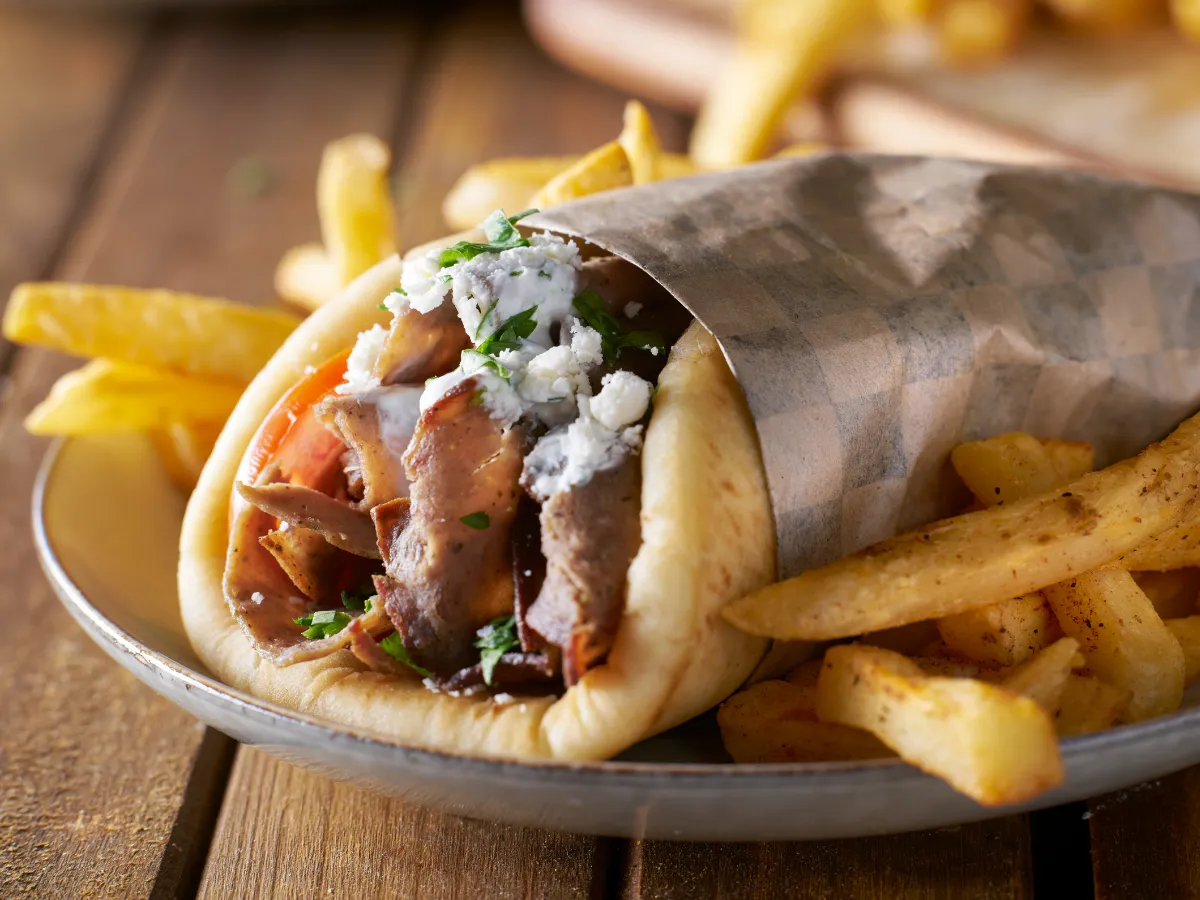
Preparation: Gyro is prepared similarly to shawarma, with meat (usually pork, chicken, or lamb) cooked on a vertical rotisserie. The beef is thinly sliced and typically served on pita bread with tomatoes, onions, tzatziki sauce, and sometimes French fries.
Cultural Influence: Gyro is an iconic Greek street food widely enjoyed in Greek cuisine. It has also gained popularity in other countries and is a standard fast-food option in many places.
Calorie Content: The calorie content of a gyro can vary depending on the type of meat and the specific ingredients used. A gyro sandwich can range from approximately 500 to 800 calories. This estimate includes the meat, bread, and typical toppings such as tzatziki sauce, tomatoes, onions, and occasionally French fries.
Components: A gyro typically consists of thinly sliced meat (pork, chicken, or lamb) cooked on a vertical rotisserie. It is often served in a pita bread pocket with ingredients such as tzatziki sauce (a yogurt-and-cucumber-based sauce), tomatoes, onions, and occasionally French fries.
Kebab Sensations: Grilled Delicacies
Origin: The kebab has a broader origin, with variations found in many cultures, including Middle Eastern, South Asian, and Mediterranean.
Preparation: Kebabs are a variety of meat dishes typically skewered and grilled. The meat can be marinated or seasoned before cooking, often accompanied by vegetables such as onions, bell peppers, or tomatoes. Kebabs can be made with different types of meat, including beef, lamb, chicken, or even seafood.
Cultural Influence: Kebabs are renowned across various cultures and countries, including Iran, Turkey, India, Pakistan, and Afghanistan. Different regions have their unique styles and flavors of kebabs.
Calorie Content: The calorie content of a kebab can vary significantly depending on the type of meat, cooking method, and accompanying ingredients. A single kebab skewer can range from approximately 200 to 400 calories. This estimate includes the meat and any accompanying vegetables or marinades.
Components: Kebabs come in various forms and can include different meats (such as beef, lamb, chicken, or seafood) that are marinated or seasoned, then skewered and grilled. The ingredients can vary, but kebabs often include a combination of meat, onions, bell peppers, tomatoes, and various spices or marinades.
When considering these dishes as part of a diet, it’s essential to be mindful of portion sizes, the choice of lean meats, and the amount of added sauces or dressings. Additionally, opting for whole-wheat or lower-calorie bread and increasing the proportion of vegetables can make these dishes more diet-friendly.
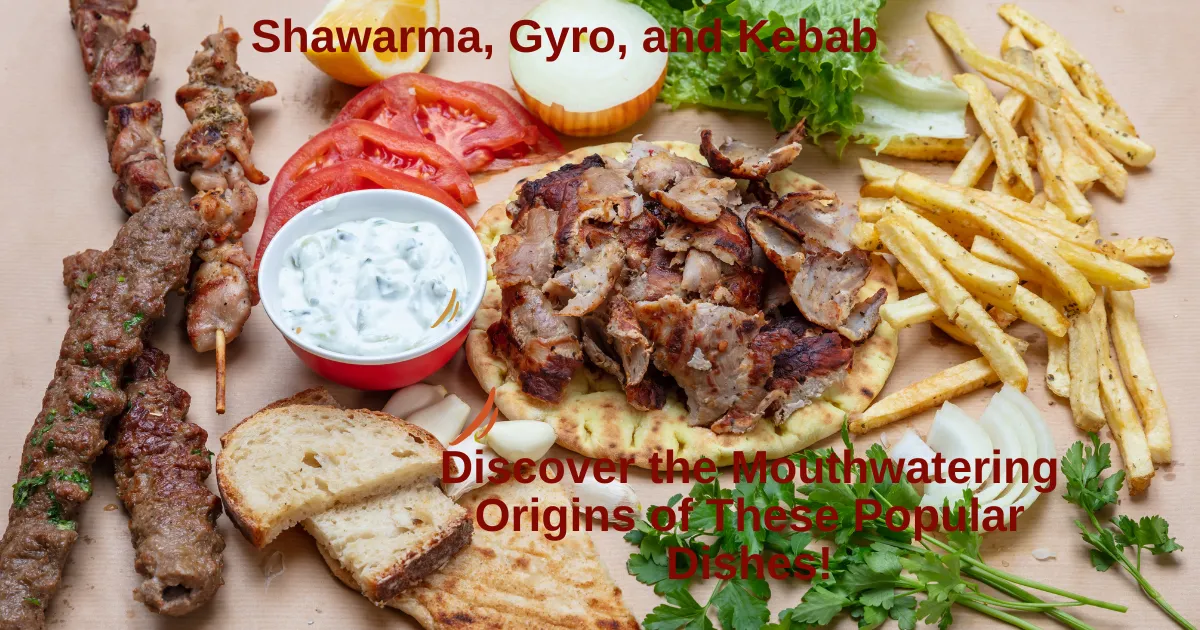
Shawarma, gyro, and kebab are popular dishes that originated in different parts of the world. While they share some similarities, they differ in their preparation, ingredients, and cultural influences.
Whether you're a food enthusiast looking to expand your culinary knowledge or want to order the perfect dish at your favorite Mediterranean restaurant, this guide will help you distinguish between these three iconic street foods.
Shawarma vs Gyro vs Kebab
Three beloved Mediterranean street foods — origins, flavors, and what makes each unique
Shawarma
Cultural Influence: Common in Lebanon, Syria, Turkey, Israel — a staple of Middle Eastern and Mediterranean cuisine
📊 Calorie Content (Typical Serving)
*Estimates for a standard shawarma sandwich with meat, bread, and toppings
Gyro
Cultural Influence: Iconic Greek street food; popular worldwide as a fast-food staple
📊 Calorie Content (Typical Serving)
*Includes meat, pita, tzatziki, and typical toppings
Kebab
Cultural Influence: Renowned across Iran, Turkey, India, Pakistan, Afghanistan — each region with unique styles
📊 Calorie Content (Typical Serving)
*Per skewer; wrap or plate adds 200–400 additional calories
🥗 Making These Dishes Diet-Friendly
When enjoying shawarma, gyro, or kebab as part of a balanced diet, consider these simple swaps:
💡 Pro tip: Many Mediterranean restaurants offer "plate" versions with rice and salad instead of bread — a great way to control portions.
Healthier Alternatives To The Traditional Sauces And Dressings Used In These Dishes
If you’re looking for healthier alternatives to the traditional sauces and dressings used in shawarma, gyro, and kebab dishes, here are some options:
Lighter Yogurt-Based Sauces: Instead of traditional mayonnaise or creamy sauces, you can opt for lighter yogurt-based sauces. For example:
Tzatziki Sauce: To make a healthier tzatziki sauce, combine Greek yogurt, grated cucumber, minced garlic, lemon juice, and dill. This combination offers a refreshing flavor without the high-fat content.
Yogurt-Herb Sauce: Mix plain yogurt with chopped fresh herbs like mint, cilantro, parsley, lemon juice, and a pinch of salt. This sauce adds a tangy and herbaceous touch.
Tahini-Based Dressings: While tahini sauce is commonly used in shawarma, you can make a lighter version by adjusting the ingredients and quantities. Here’s an example:
Light Tahini Dressing: Combine tahini, lemon juice, water, minced garlic, and salt. Adjust the consistency by adding more water as needed. This dressing retains the nutty flavor of tahini but with fewer calories.
Instead of heavy sauces, use fresh salsas or chutneys to add flavor and moisture.
These options are typically lower in calories and provide a burst of freshness. Some ideas include:
Tomato-Cucumber Salsa: Dice tomatoes and cucumbers and mix them with chopped onions, cilantro, lime juice, and a pinch of salt.
Mint-Coriander Chutney: Blend fresh mint leaves, coriander leaves, green chili, garlic, lemon juice, and a little water until smooth. Adjust the spiciness to your preference.
Citrus Vinaigrettes: Light and tangy citrus-based vinaigrettes can be a healthier alternative to heavy dressings. Consider making a simple dressing with lemon or lime juice, olive oil, Dijon mustard, and a touch of honey or maple syrup for a hint of sweetness.
Hot Sauce or Spicy Condiments: If you enjoy some heat, adding a dash of hot sauce or spicy condiments can provide flavor without excessive calories. Look for options that are low in added sugars and sodium.
Shawarma vs Gyro: A Tale of Two Street Foods
Shawarma and gyro are two of the world's most beloved street foods, each with deep cultural roots and passionate followings. While they share similarities in preparation, their cultural contexts and street food traditions are uniquely distinct.
In the Middle East, shawarma is a daily ritual—a quick, satisfying meal that brings people together. In Greece, gyro is the quintessential fast food, enjoyed at all hours with friends and family. Both dishes transcend mere sustenance; they are woven into the social fabric of their cultures.
This sidebar explores the vibrant street food culture surrounding these iconic dishes—from late-night cravings to lunchtime queues, from family gatherings to solo indulgences.
Street Food Culture
Shawarma · Gyro · Kebab
Shawarma
In the bustling streets of Beirut, Istanbul, and Tel Aviv, shawarma is more than a meal—it's a way of life. The vertical spit spins throughout the day, drawing crowds with its intoxicating aroma of warm spices.
🍋 The Experience: Watch the master carver slice thin layers directly onto fresh pita, add pickles and tahini, wrap it up, and hand it to you in seconds. Often enjoyed standing at the counter, sharing stories with the vendor.
Gyro
From Athens to the Greek islands, gyro is the heartbeat of Greek fast food. Found in every neighborhood—from tourist hotspots to local hangouts—it's the ultimate comfort food.
🥙 The Experience: Gyro is often served with fries tucked inside the pita—a beloved Greek twist. Eaten with tzatziki dripping down your hands, it's a messy, joyful experience best shared with friends.
🤝 Where They Meet
Both shawarma and gyro share a universal appeal: they're affordable, delicious, and bring people together. Whether it's a midnight craving after a night out or a quick lunch between errands, these dishes are the ultimate social food—meant to be shared, enjoyed, and remembered.
Iconic Recipes
start your culinary adventure from your own kitchen.


August 24, 2023 at 9:43 amInMotion Hosting: InMotion Hosting offers fast and reliable hosting services with excellent customer support. They provide a variety of hosting options, including business hosting, VPS hosting, and dedicated servers.
Bluehost: It is one of the most popular hosting providers, recommended by WordPress. They offer a user-friendly interface, excellent uptime, and 24/7 customer support.
August 25, 2023 at 3:56 pm[…] Shawarma vs. Gyro: Wrapping Up the Ultimate Food Rivalry […]